
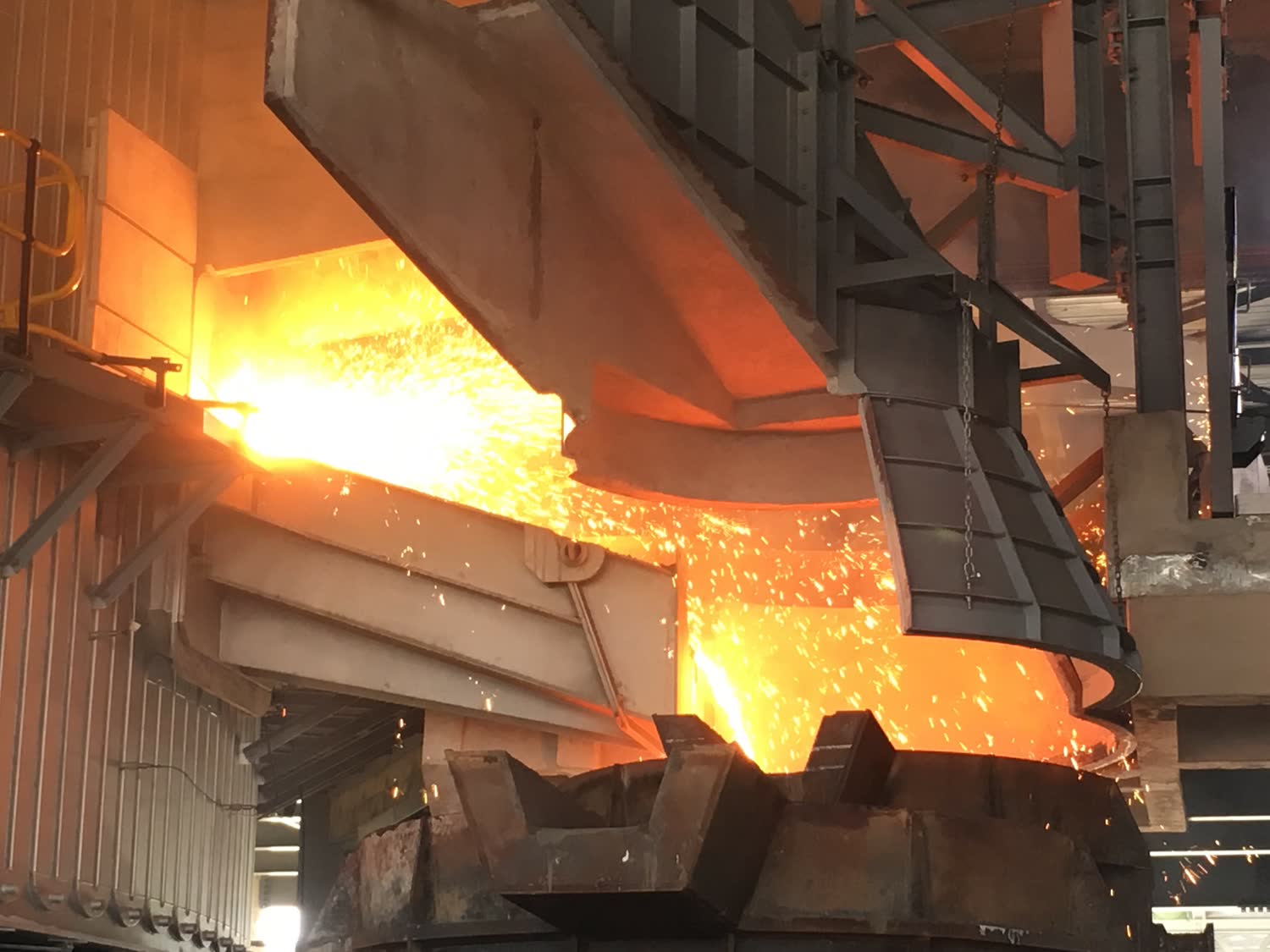
We manufacture high carbon ferro-manganese, sinter and BREX at our smelter in Samalaju, Sarawak, the alloys and feedstock that make modern steel stronger.
Steel needs manganese. We make the manganese alloys that steelmakers depend on.
Sakura Ferroalloys is a leading producer of high carbon ferro-manganese (HCFeMn), with sinter and BREX briquetting that feed our furnaces and an expanding range that now includes silico-manganese (SiMn), with medium and low carbon ferro-manganese in development. Everything is made at our facility in Samalaju Industrial Park, Bintulu, Sarawak, where we run the whole chain ourselves: from receiving raw materials, through smelting, casting and screening, to storing, bagging and shipping the finished alloy. Everything below describes how that happens, step by step.
HCFeMn
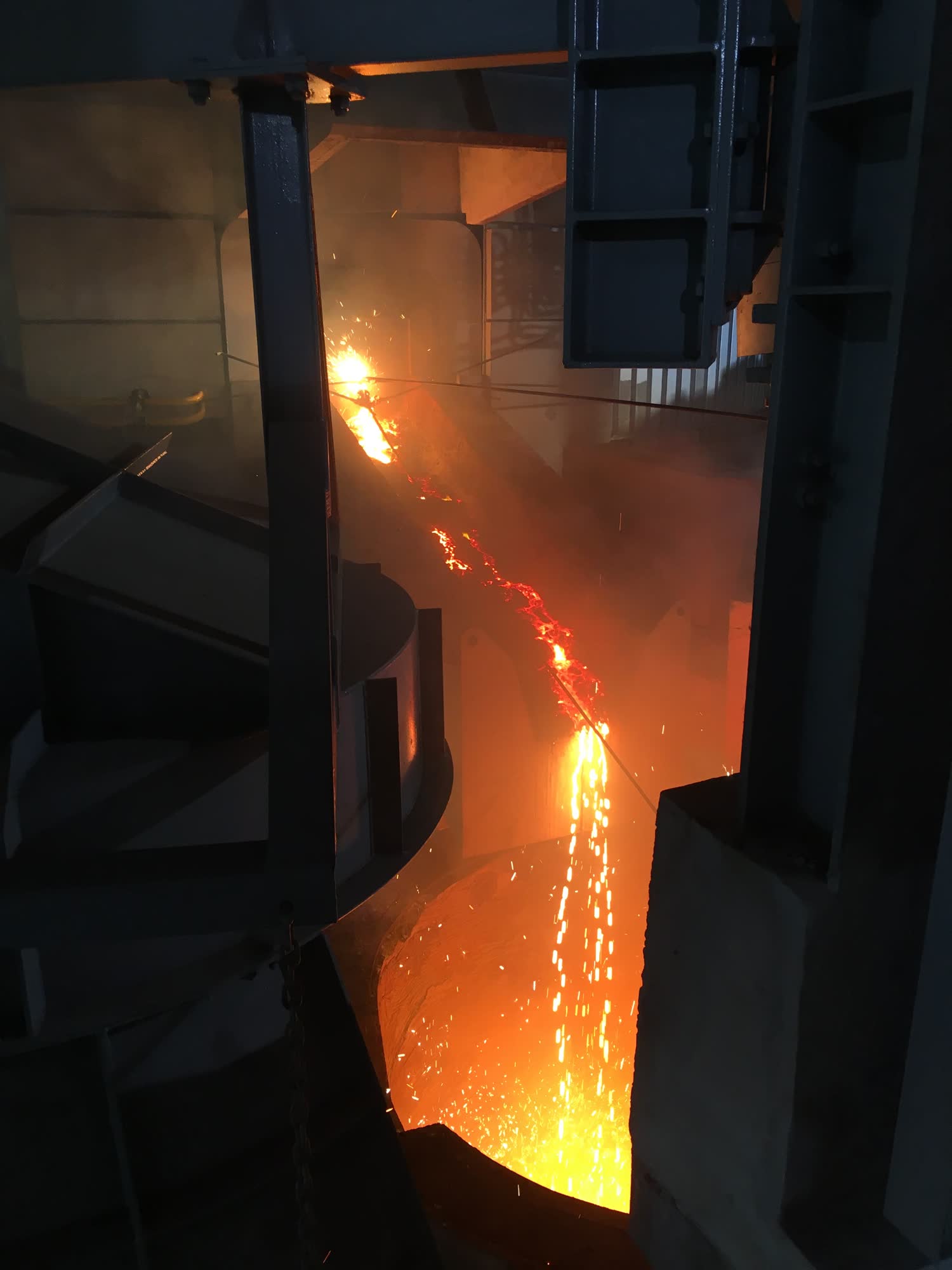
High carbon ferro-manganese is an iron-manganese alloy with a high carbon content, used by steelmakers as a deoxidiser and as a source of manganese. Adding manganese removes oxygen and sulphur from molten steel and strengthens the finished metal, which is why nearly all steel made today relies on a manganese alloy somewhere in the process.
At Samalaju we produce HCFeMn from manganese ore reduced with metallurgical coke in two 81 MVA closed submerged-arc furnaces, then cast, crushed and screened to the sizes our customers specify. Our primary grade is 74-76% manganese, supplied to steel markets across the USA, Europe, Japan, Taiwan, India, Australia and the Middle East.
| Manganese (Mn) | 74 – 76% |
|---|---|
| Carbon (C) | 6 – 7.5% |
| Silicon (Si) | ≤ 1.2% |
| Standard sizing | Customer specified |
Typical values. Final specifications are agreed per order.
SiMn
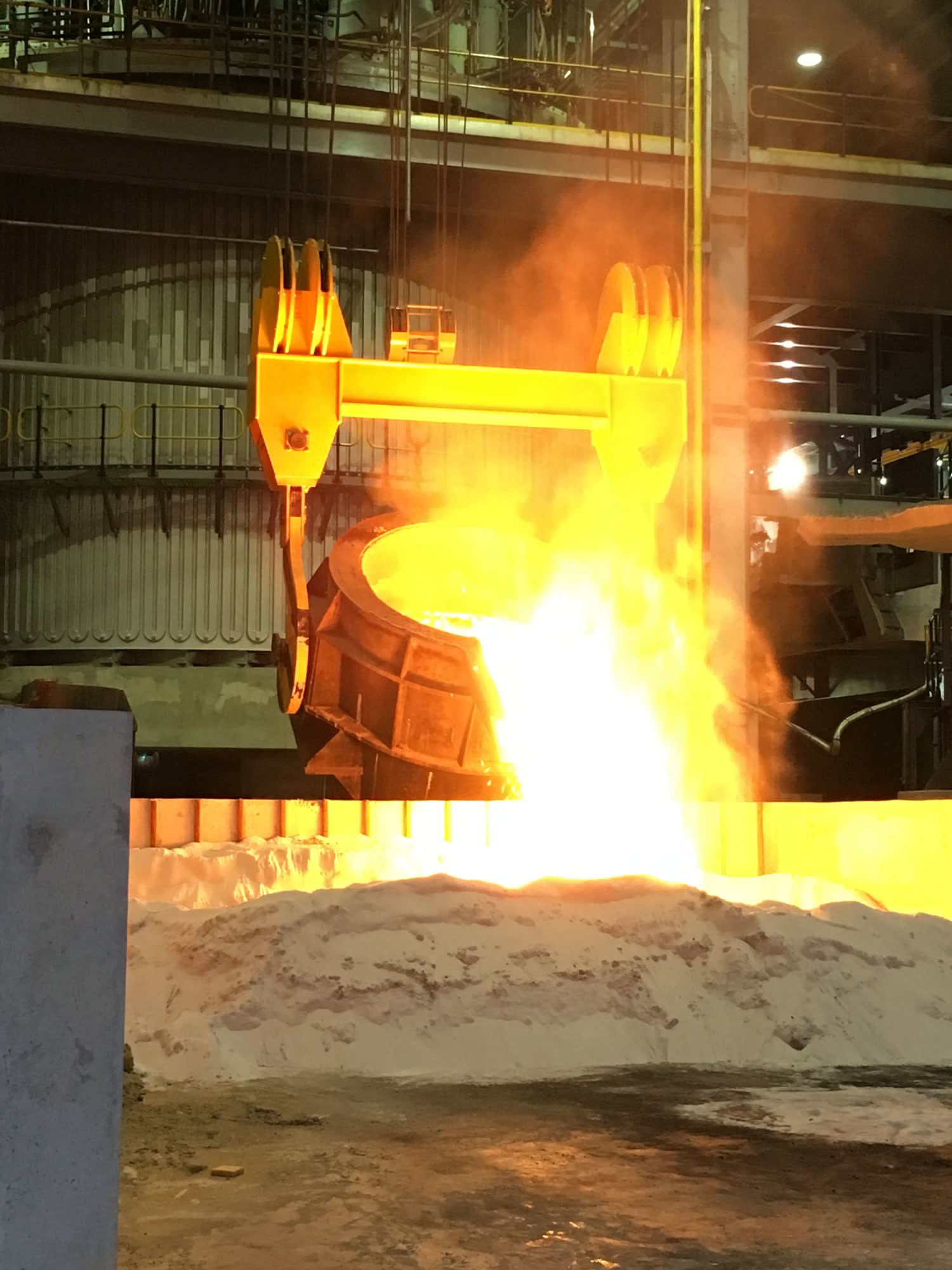
Silico-manganese is a manganese-silicon alloy used in steelmaking as a combined deoxidiser and alloying agent. Because it carries both manganese and silicon, it lets steelmakers add the two elements in a single addition, which improves strength and cleanliness while controlling cost.
Sakura is expanding into SiMn through a dedicated production campaign, diversifying our product range and strengthening market competitiveness. It is manufactured through the same controlled chain as HCFeMn, from raw-material receipt through smelting, casting, crushing and screening, at our Samalaju facility in Bintulu, Sarawak.
| Manganese (Mn) | 65 – 68% |
|---|---|
| Silicon (Si) | 16 – 20% |
| Carbon (C) | ≤ 2.0% |
| Standard sizing | Customer specified |
Typical values. Final specifications are agreed per order.
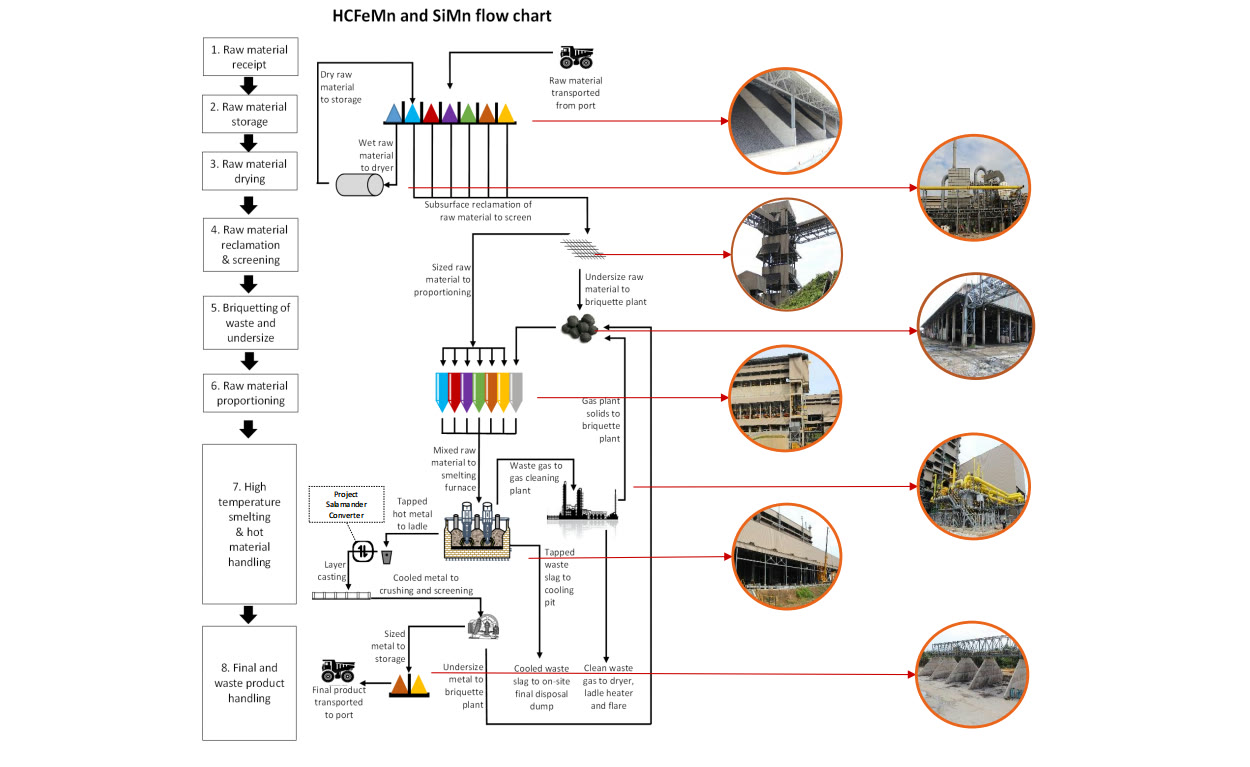
From manganese ore to finished alloy in eight controlled stages. Our scope runs from raw-material receipt right through to transporting the final product to port.
Manganese ore, coke and fluxes are transported from port and received at the plant, ready to enter the production chain.
Dry material is moved to storage; wet material is routed to the dryer first so moisture is controlled before processing.
Wet raw material passes through a dryer to reach the moisture level the furnaces need for stable, efficient operation.
Material is reclaimed from storage and screened. Correctly sized material goes to proportioning; undersize and fines are sent to the briquette (BREX) plant.
Fines, filter cake and recovered dust are bound into extruded BREX briquettes so undersize material and by-products return to the furnace instead of being wasted.
Sized raw materials and briquettes are weighed and blended to the precise recipe each alloy grade requires before charging.
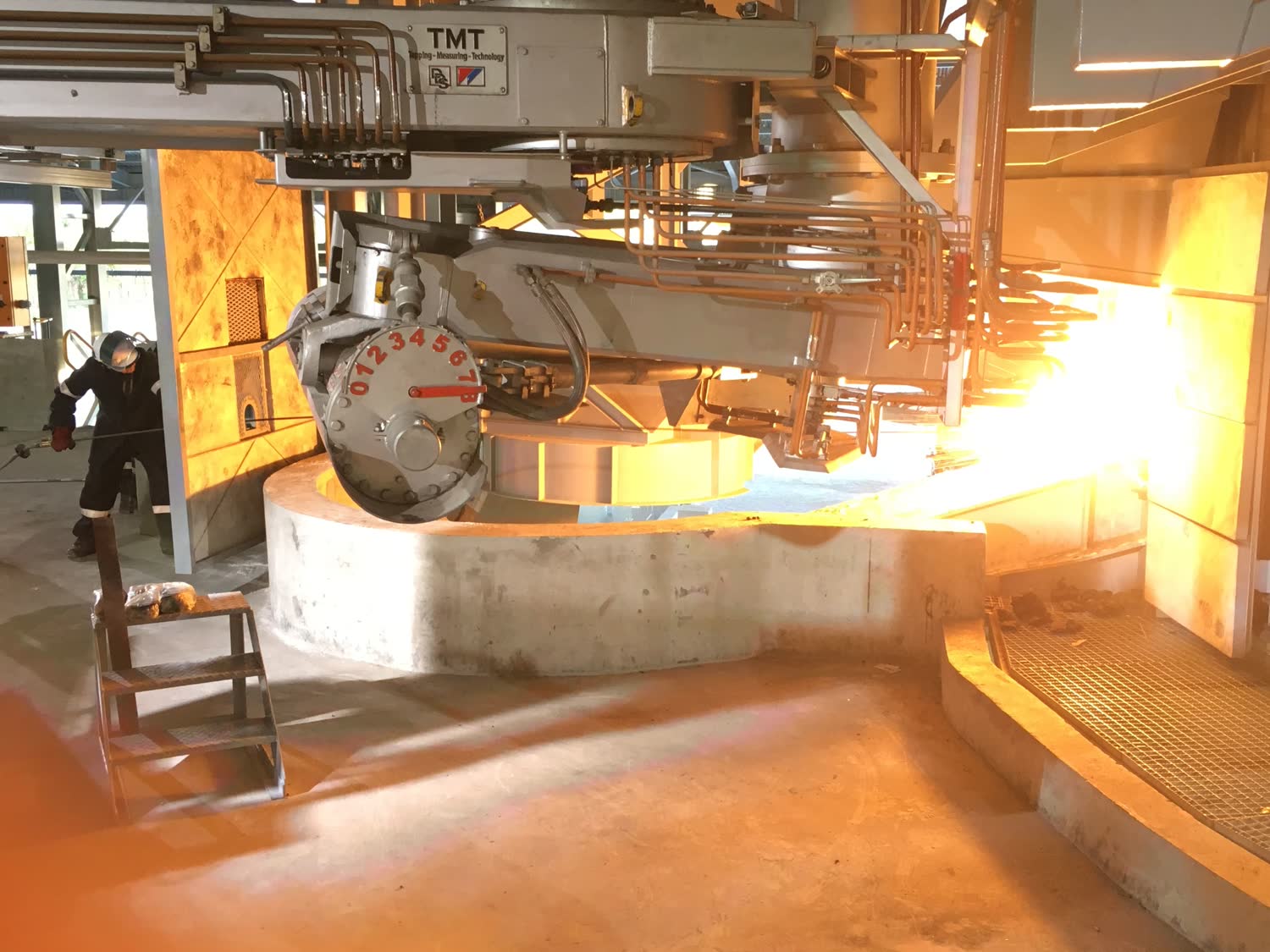
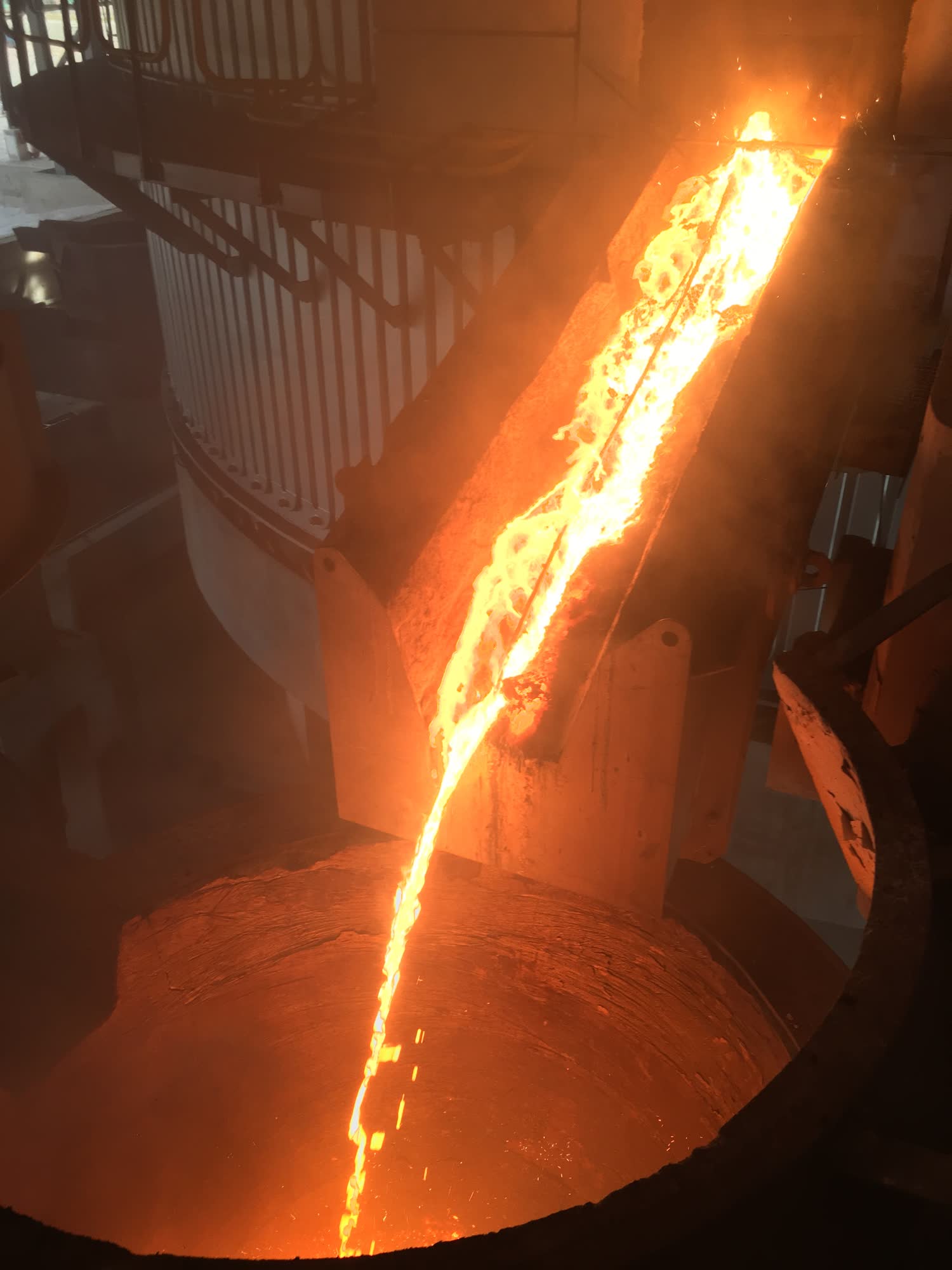
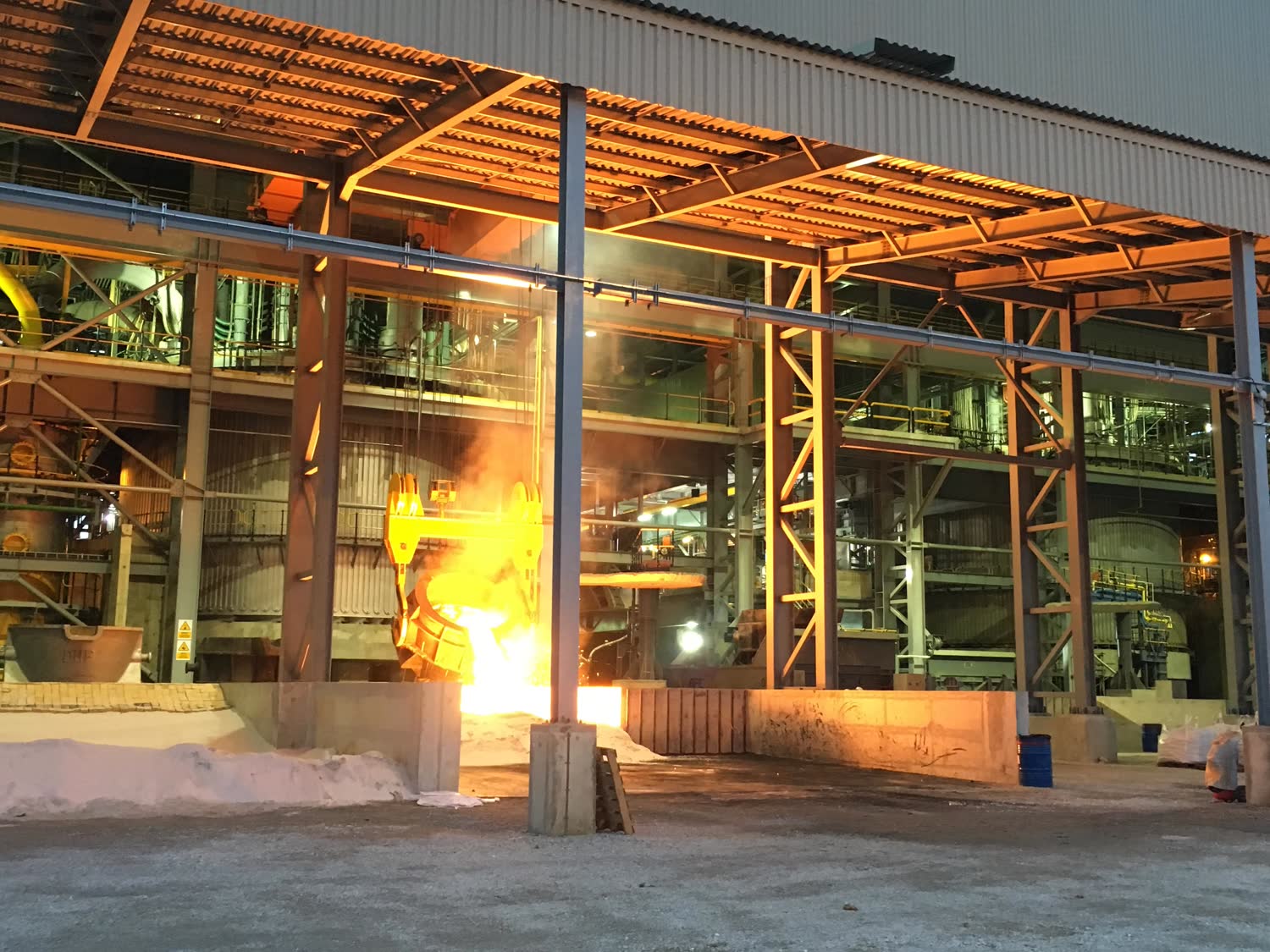
The blended charge is smelted in submerged-arc furnaces. Hot metal is tapped to ladle, waste gas goes to the gas-cleaning plant and slag is tapped to the cooling pit. Layer casting and the Project Salamander converter support hot-material handling.
Cooled metal is crushed and screened; sized product goes to storage and is transported to port. Undersize returns to the briquette plant, slag goes to on-site disposal, and cleaned gas is reused for drying, ladle heating and flaring.
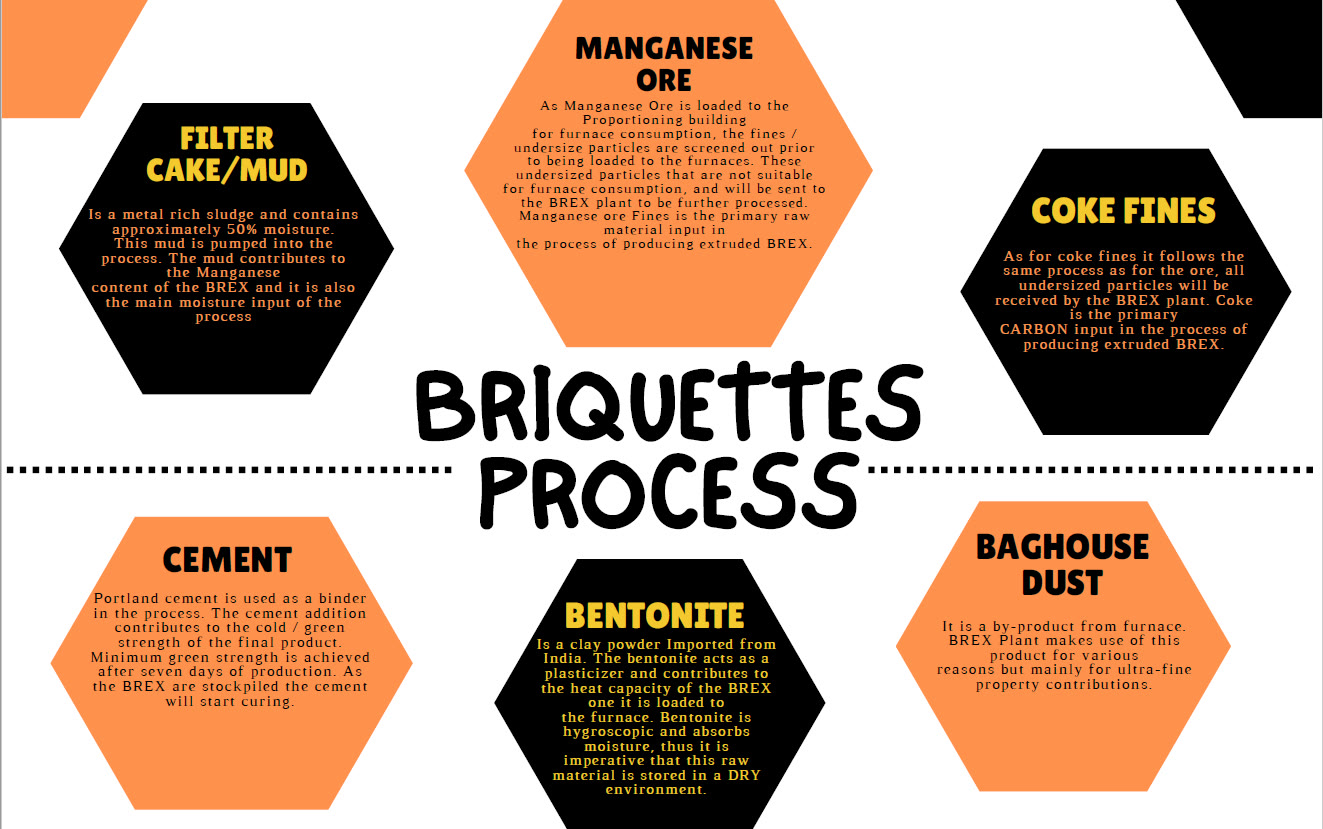
Nothing usable goes to waste. Our briquette (BREX) plant binds fines and recovered by-products into extruded briquettes that go back into the furnace. Six raw materials make up each briquette:
Undersize manganese ore particles screened out before the furnace. Fines are the primary raw-material input for producing extruded BREX.
Undersize coke received by the BREX plant, following the same route as the ore. Coke is the primary carbon input for the briquettes.
A metal-rich sludge of roughly 50% moisture, pumped into the process. It adds manganese content and is the main moisture input.
Used as a binder. The cement gives the briquettes their cold (green) strength; minimum green strength is reached about seven days after production as the BREX cure.
A clay powder imported from India that acts as a plasticiser and adds to the heat capacity of the BREX. It is hygroscopic, so it must be stored in a dry environment.
A by-product captured from the furnace. The BREX plant reuses it, mainly for its ultra-fine property contributions.
Talk to us about high carbon ferro-manganese and silico-manganese supply, specifications and shipping.
Contact our team